
Seafood M&As are changing – Here’s how

It’s not only the rate of M&A’s that has slowed in seafood but the shape and structure of deals too.

M&A deals in the seafood industry are being reshaped by current economic factors that are impacting both the rate of dealmaking and how deals are structured.

The rate of M&As in the seafood industry is expected to be hindered by the difficulties in raising financing, said John Doucette, executive vice president and head of commercial lending for US-based M&T Bank.

“I think it’s going to be at a lesser pace just given the cost of money now,” Doucette told IntraFish.

A recent IntraFish report forecasted the number of global seafood M&A’s this year is likely to fall short of 2022 levels.

While international companies have been showing interest in moving in on US acquisitions, particularly in the then-northeast corner of the United States where the seafood industry is more fragmented, Doucette said commercial interest rates play much more into executives’ thinking.

“It’s just tough with the prime rate at 8.5 percent, and although (the US Federal Reserve) didn’t raise it the other day they certainly didn’t give any indication that they are going to reduce rates anytime soon either. It’s going to rely on more self-financing too,”

Must have?

The higher cost of capital is also making buyers more cautious, leading to the postponement of deals considered less strategic, Ignacio Kleiman, managing partner at investment banking firm Antarctica Advisors said.

Acquisitions generally fall into two categories “must have” and “nice to have,” Kleiman said.

“If you are presented with a have-to-have transaction, you are going to find a way to do it. If you are presented with anice-to-have transaction, you may do it or you may decide to postpone it a bit.”

While there is still a good volume of M&A activity, in part helped by pent-up demand left over from the COVID-19 pandemic, deals that are going ahead are seeing a greater use of earnouts and seller financing arrangements.

Earnouts are a pricing structure in which the sellers must “earn” part of the purchase price based on the performance of the business following the acquisition.

Seller financing is an arrangement in which the seller handles the mortgage process instead of a financial institution. Instead of applying for a conventional bank mortgage, the buyer signs a mortgage with the seller.

“Transactions are getting done. I think that buyers are being a little bit more disciplined on how they put the transactions together and what transactions are getting done because the cost of capital is forcing them to pursue transactions that have a fairly higher level of synergies in order to recoup some of that more expensive capital that they are using,” said Kleiman, who spoke on the changing nature of the seafood industry at a recent seafood industry forum in New Bedford, Massachusetts.

The event, which drew 60 seafood business leaders, was organized by M&T Bank, which operates over 1,000 branches in 12 US states, and accounting firm Citrin Cooperman, with the support of investment banking group Antarctica Advisors.

The forum was targeted at key seafood players in the New Bedford and the wider New England community to exchange ideas on current events affecting the sector. It’s hoped the forum might become an annual or biannual event.

Be creative

Where previously companies may have worked with a commercial bank and ended up signing a single check to make an acquisition, these days buyers and sellers need to be a bit more creative in how a deal is structured.

Companies may opt not to sell all of their shares in the business, retaining a minority and rolling over some of their equity, exiting perhaps three to five years later.

“It requires a little bit more creativity with buyers, a little more flexibility on both the seller and the buyer side.”

“Today, more than ever, you need an investment banker to help those transactions happening,” Kleiman said.

The northeast corner of the United States with its proliferation of $100 million to $400 million (€93 million €372million) seafood companies is proving attractive to those on the lookout for acquisitions including overseas investors, offering them more manageable deal sizes and boosting the likelihood of consolidation, Kleiman said.

“In terms of international players, I think the Europeans are a little more aggressive than the Asians, that’s why you see more movement on the east coast,” Kleiman said.

On the West Coast there are few processors, and in the Alaska-Seattle corner of northwest United States companies are frequently very large or very small, with little in between, he noted.

Even in the most challenging times, deals can be done, however, said Kleiman.

Despite the difficulties presented by COVID lockdowns, Antarctic Advisors still managed to close its biggest-ever deal in January 2021 when Premium Brands Holdings and a coalition of Mi’kmaq First Nations completed the acquisition of Canadian shellfish harvesting and processing giant Clearwater Seafood.

For Premium Brands the acquisition was a must-have deal. “Everyone decided to chug along,” Kleiman said.

___

Source: Intrafish
LatAm’s seafood sector faces decreased investment amid political turmoil

Ignacio Kleiman warned that Latin America’s seafood industry is facing “unprecedented uncertainty” because political upheaval in Argentina, Chile, Peru and Ecuador has spurred companies with strong finances to look overseas, meaning domestic investment will slow and only sporadic strategic deals are likely

Antarctica Advisors: ‘Perfect storm’ makes more seafood consolidation inevitable

Ignacio Kleiman told Undercurrent that a “perfect storm” of inflation‑driven cost increases, higher interest rates and reduced consumption will force seafood companies to recapitalize and merge, predicting more consolidation across upstream and downstream sectors as firms struggle to protect margins

Antarctica Advisors Acts as Exclusive Investment Banking Advisor to Sea Fresh USA in its 100% Sale to Oceano Seafood

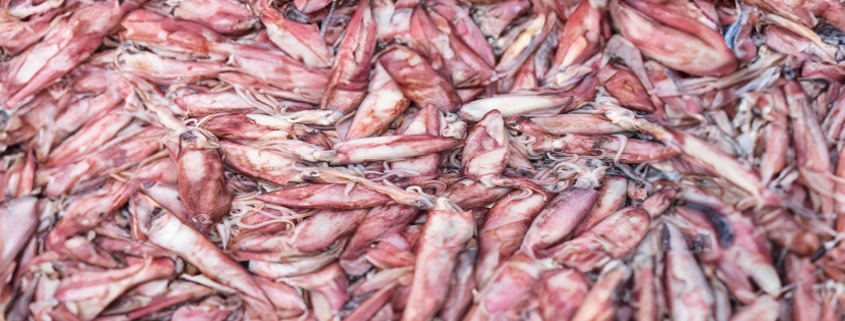
September 26, 2023 – Antarctica Advisors LLC, the leading Seafood Industry-focused M&A advisory firm, acted as the exclusive investment banking advisor to Sea Fresh USA (“Sea Fresh”), one of the largest processors of fresh, premium-quality, wild-caught Loligo Squid in the U.S., in its sale to Oceano Seafood (“Oceano”), an international fishing and processing conglomerate from Lima, Peru.

Founded in 1981, Sea Fresh USA is a fully integrated seafood business with fishing, unloading, processing & packing operations. Sea Fresh has docking operations in Galilee, RI (Handrigan Seafoods) and a BRC-certified processing facility in North Kingstown, RI. The company is well known for its fresh and frozen Squid products distributed through retail and food service.

James Fox, Owner of Sea Fresh, commented: “Oceano has been a customer of ours for several years and we are excited to be their first acquisition in the U.S. market. We are thankful to have worked with the Antarctica Advisors team who played a key role in helping us navigate this complex transaction process. Their senior banker M&A advice was critical to the structuring and negotiating the best possible transaction for me and my employees.”

Ignacio Tirado, President of Oceano Seafoods, shared: “It is an honor to continue Jim Fox’s legacy and to join the company’s experienced management. We aim to continue investing and growing the business in the U.S. and integrate it our global sourcing capabilities into it.”

Ignacio Kleiman, Managing Partner of Antarctica Advisors, pointed out: “Sea Fresh provides Oceano direct access to the U.S. market with a brand recognized for its high-quality fresh Squid products. We very much appreciated the opportunity to have worked with Sea Fresh’s team and look forward to watching the company’s continued growth.”

For Oceano, the acquisition of Sea Fresh expands its international footprint while deepening its supplier network and presents numerous synergies facilitating growth including diversifying its product offerings with access to the U.S. market.

Antarctica Advisors is the leading US-based, independent investment banking firm providing corporate clients in the global Seafood Industry with specialized M&A advisory, private equity and debt capital raising services. The firm’s highly specialized Seafood Team is comprised of professionals with significant knowledge of the Seafood Industry, as well as a proven track record of successful transaction execution.

Antarctica Advisors LLC is a licensed broker-dealer, member of FINRA and SIPC.

For further information contact Ignacio Kleiman, Antarctica Advisors LLC at:
IKleiman@AntarcticaLLC.com or visit www.AntarcticaLLC.com

$400m Peruvian group snaps up US squid supplier

Peru’s Oceano Corp. purchased Rhode Island‑based squid processor Sea Fresh USA, adding an MSC‑certified squid operation and lifting Oceano’s turnover to about US$425 million, though U.S. rules mean the buyer can own only 25 % of the vessels

Antarctica Advisors Acts as Exclusive Investment Banking Advisor to Boston Sword & Tuna in its 100% Sale to Fortune International, LLC

June 13, 2023 – Antarctica Advisors LLC, the leading Seafood Industry-focused M&A advisory firm, acted as the exclusive investment banking advisor to Boston Sword & Tuna, Inc. (“Boston Sword”), one of the largest distributors of fresh, premium-quality, wild-caught and farm raised seafood in North America, in its sale to Fortune International, LLC (“Fortune”), one of the largest seafood and specialty food distributors in the United States.

Based in the heart of Boston’s Seaport District, Boston Sword was established in 2003 by the Scola Family.  Michael Scola, CEO of Boston Sword, will continue to run the company along with Co-Owner and President Larry Dore.  With the backing of Fortune and capacity added through a recent 9,000 sq. ft. expansion of its processing plant, Boston Sword will take its already sizable skin-pack business national and significantly grow its other lines of business.

Read more

Boston buzz: SENA overcome by M&A tidal wave

At the 2023 Seafood Expo North America, Undercurrent reported a “tidal wave” of M&A announcements, with six major deals—including Fortune International’s purchase of Boston Sword & Tuna adding almost US$300 million in sales—reflecting pent‑up activity after 2022 and showing that cheap capital and succession planning are fueling consolidation

Access to finance tightening, but savvy seafood businesses can still make deals

The U.S. Federal Reserve raising interest rates has caused banks to pull back on financing, and that means merger and acquisition activity will slow in the coming quarters, according to a panel of financial experts, speaking during Seafood Expo North America.

The panel, on 14 March at SENA in Boston, Massachusetts, agreed higher interest rates and an uncertain economic situation will lead banks to be much more selective about lending than they were during the post-Covid recovery period when financing was cheap. However, Jason Brantly, a senior vice president and senior relationship manager at Bank of America, said banks will still want to help make deals if the numbers make sense.

“The pendulum has definitely swung from really aggressive lending and obviously cheaper lending rates, but banks are still eager to lend,” Brantly said.

The failure of Silicon Valley Bank on 10 March, and the subsequent failure of Signature Bank, were two of the three largest bank failures in U.S. history, but a lot of the money that was taken out of those banks didn’t just disappear, and Brantly said both Bank of America and fellow panel member John Doucette’sinstitution – M&T Bank – are likely going to see large deposits in the near future as people look for more-stable institutions. That means banks will have more money to reinvest in customers.

However, signs are pointing to banks paring back the amount of lending they do. The leverage B loan market pulled back in January and February as banks decided against loans with slightly higher risk, Brantly said.

“2022 was one of the lowest years in more than a decade, and we’re well below that pace,” he said. “I think what’s happened in the bank market in the last week will probably continue to make it where there is not going to be a lot of folks wanting to go to that market and access capital.”

A court decision finding fishing permits are a revocable privilege, rather than a compensable property, will also impact valuations for seafood companies with wild-catch operations. Depending on how the ruling gets interpreted, that may make it more difficult for companies with fishing vessels to access financing.

“If that becomes a precedent, that will have a substantial impact for those kinds of companies and their ability to access capital markets,” Brantly said. “We depend on that quota as collateral.”

More-expensive financing, coupled with an increasing reluctance from banks to lend to businesses, doesn’t mean merger-and-acquisition activity is off the table – as evidenced by the announcement that Cooke was acquiring Slade Gorton just hours after the panel took place.

“I think the appetite is still there. We’re certainly still interested in lending,” Brantly said.

Doucette said for many transactions requiring large amounts of financing, senior lending institutions aren’t the way to go.

“It’s very easy when rates are low to sit back and say, ‘Get everything you can out of that senior lender,’” he said. “But that term B stuff has just gone away, so now it’s time for the private-equity folks, the family offices. We’ve seen a lot of international activity in the [U.S.] Northeast coming in.”

Term A loans are amortized evenly over five to seven years, while term B loans have nominal amortization over the first five to eight years of the loan and then a large payment in the final year, making it less costly for the company getting the loan, but riskier for the bank in the long run.

Brantly said term B acquisitions are more difficult, but a creative business deal can still be struck – it just takes work and sound advice from advisors. The community development groups in Alaska that partnered with Maruha Nichiro to purchase nine pollock vessels, he said, are one example of groups coming together to make creative deals with unique structures that still accomplish merger and acquisition goals.

Softness creeping into the global economy will also more than likely force some businesses that fall into difficulty to pursue a sale.

“That’s what it’s going to take, is more folks either going together splitting up the deal, or coming together to hold assets in that kind of creative way,” Brantlysaid.

Antarctica Advisors Managing Partner Ignacio Kleiman said that those companies in tight spots should not wait to get in touch with an advisor if the predicted recession makes things difficult for them.

“Don’t wait to call somebody,” he said. “We have worked with many companies in the sector that went through financial difficulties. The smartest ones, they realize it right away, and they would call us or some other advisor.”

Getting ahead of liquidity problems early, and getting in touch with commercial banks early, can help stave off a bigger problem down the road.

“The main thing they are looking for is, do you have a plan?” Kleiman said. “They don’t want to take over your company. They don’t want to liquidate you. They like their clients, and we have done a number of transactions where we work collaboratively. But they want to see that you’re taking your situation seriously.”


Photo by Chris Chase/SeafoodSource

Kleiman: Icicle whitefish sale boosts all parties’ ‘efficiency’

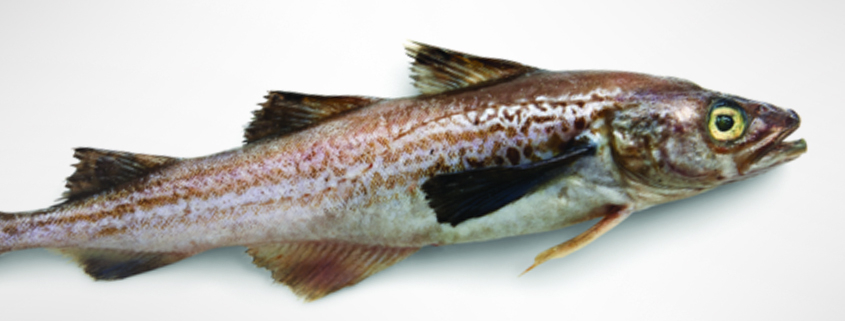
Ignacio Kleiman said Cooke’s sale of Icicle Seafoods’ whitefish assets—including nine vessels and about 4 % of the Bering Sea pollock quota—to a partnership of Maruha Nichiro and two Community Development Quota groups will allow Cooke to focus on higher‑value species while giving the buyers greater volume despite foreign‑ownership restrictions

Maruha, CDQ groups confirm acquisition of Icicle whitefish assets

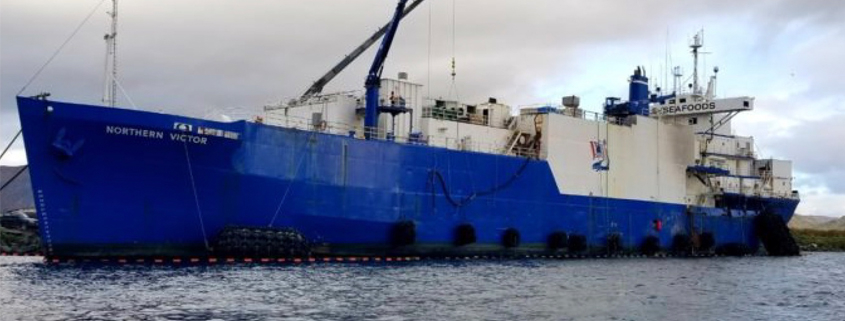
Maruha Nichiro and Alaska Community Development Quota groups confirmed they acquired Icicle Seafoods’ whitefish assets—including the Northern Victor processing plant, nine vessels and roughly 4 % of the Bering Sea pollock quota—for an estimated US$180–200 million in a structure designed to meet U.S. ownership rules